Wild Logic Ranch Lessons: The Apology Is Still in the Toolbox
Calming down matters. Repairing what the reaction affected matters too.

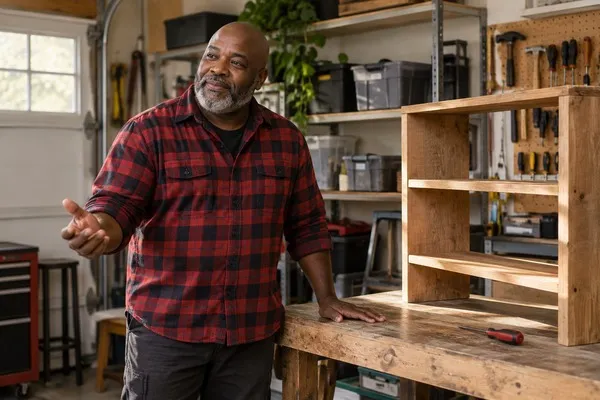
The shelf is level, the screw is tight, and the apology remains safely stored beneath the socket wrenches.
It is a respectable repair—just not the one the relationship needed.
Practical problems can be wonderfully cooperative. Find the loose screw. Use the correct tool. Check the level. Human consequences are less likely to sit quietly on a workbench while we congratulate ourselves for feeling calmer.
Beautiful Shelf. Wrong Repair.
Emotional regulation matters. When a trigger has taken over, calming the body and interrupting the reaction can prevent additional damage.
But calm is not a time machine. It does not retrieve the sharp words, erase the accusation, reopen the conversation we shut down, or automatically repair the agreement we broke.
Once the nervous system settles, another question may remain: What did my reaction affect?
The Consequence Is Part of the Pattern
A trigger may be internal, but the reaction often becomes visible. Tone changes. Distance appears. Trust gets strained. Other people begin adjusting themselves around what they expect from us.
Then we feel regret, promise that next time will be different, and try to move forward. Without a closer look at the consequence and the response that created it, the same cycle may return: trigger, reaction, regret, promise, repeat.
Repair helps interrupt that cycle because it brings the impact into the work—not only the intention.
Responsibility Without Self-Attack
Taking responsibility is not the same as declaring yourself terrible. Self-attack can become another way to avoid the actual repair. If the conversation turns into proving how awful you feel, the person affected may once again carry the emotional load.
Clear responsibility sounds more grounded: “My tone was harsh.” “I withdrew instead of answering.” “I blamed you for something I had not examined.” That ownership does not erase your pain. It refuses to make someone else responsible for the form your protection took.
Repair Does Not Control the Outcome
A sincere apology cannot guarantee forgiveness, immediate closeness, or the response you hope to receive. Repair is not a lever that makes another person react correctly.
It is a choice to tell the truth about your part, acknowledge the effect, and identify what you want to practice differently. Personal power includes doing the next honest thing without trying to control the verdict.
Put the Apology Within Reach
Inside Mastering Emotional Pain: Reclaim Your Power, you connect triggers and automatic coping patterns with their real-life consequences, then build a clearer plan for a new response. That includes recognizing when regulation must be followed by ownership, repair, and practice.
You may not be able to redo the moment. You can make the pattern less likely to keep using the same tools. The shelf can remain level. The apology can finally come out of the toolbox.
Ready to connect calmer reactions with honest repair?
→ https://www.logicaltoo.com/mep
◇ ◇ ◇ ◇ ◇ ◇ ◇ ◇ ◇ ◇ ◇ ◇ ◇ ◇ ◇ ◇ ◇ ◇ ◇ ◇ ◇
🌿 Marilyn Burnette 🌿
Personal Power Coach | Calm Control in Real Life
Creator of the Trigger-to-New-Response Method
◇ ◇ ◇ ◇ ◇ ◇ ◇ ◇ ◇ ◇ ◇ ◇ ◇ ◇ ◇ ◇ ◇ ◇ ◇ ◇ ◇
