Wild Logic Ranch Lessons: Some Old Rules Outlive the Fence They Were Built For
A rule can make perfect sense in one pasture and become strangely inconvenient after the terrain changes.
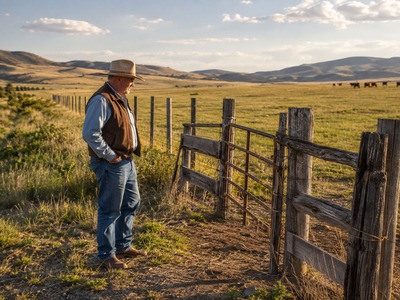
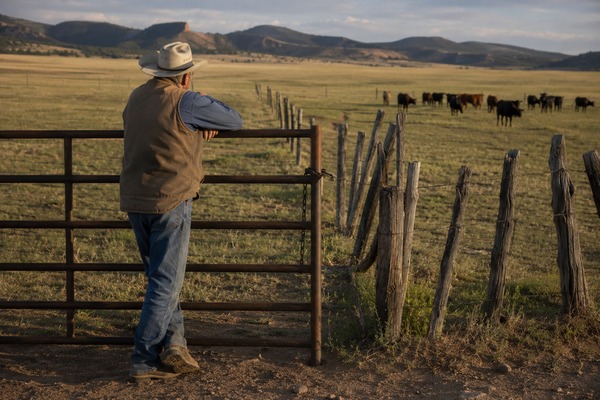
A fence can save the herd and still be in the wrong place ten years later.
That does not mean the fence was stupid.
It means the pasture changed.
This is one of the simplest ways I know to think about old emotional rules.
Some of the rules people still live by were built for terrain they no longer inhabit.
Every Environment Develops Rules
On a ranch, rules have practical reasons.
Close the gate.
Check the fence.
Know where the animals are.
Keep equipment where people expect it.
You do not have to hold a three-hour philosophical meeting about each one.
The environment teaches you what works.
Human emotional environments do something similar.
Families develop rules.
Schools develop rules.
Communities develop rules.
Relationships develop rules.
Sometimes they are spoken.
Often they are not.
"Don't upset Dad."
"Keep the peace."
"Don't talk about feelings."
"Be useful."
"Don't look weak."
"Don't need too much."
"Get it right."
"Handle it yourself."
A child does not usually sit down and evaluate whether those rules will remain useful at age 43.
The child adapts.
Adaptation Can Become Identity
One person becomes the peacemaker.
Another becomes the overachiever.
Someone learns to disappear when tension starts.
Someone else becomes the fixer.
Another decides toughness is safer than vulnerability.
These roles can be remarkably effective in the environment that created them.
If keeping everyone happy reduced conflict, becoming excellent at reading the room made sense.
If accomplishment earned approval, performance mattered.
If speaking up created more trouble, silence may have been intelligent.
That is why I do not like treating old emotional patterns as evidence that something is fundamentally wrong with a person.
A behavior may have history.
A rule may have had a job.
Then the Terrain Changes
This is where things get interesting.
The child becomes an adult.
The home changes.
The authority figures change.
The relationships change.
The opportunities change.
But an old rule can remain standing exactly where it was built.
"Never disappoint anyone."
"Never show uncertainty."
"Always keep everybody calm."
"If I am not useful, I am not valuable."
"If someone is upset with me, something is wrong."
Now the person may be responding to present-day situations with instructions written for an earlier landscape.
The fence is still there.
Nobody has checked whether it is still on the property line.
Old Rules Become Fast Reflexes
This is one reason adult reactions can be confusing.
You may logically know that disagreement is normal.
Yet your body reacts as though conflict is dangerous.
You may know that asking for help is reasonable.
Yet something inside insists that needing help is failure.
You may understand that one mistake does not define you.
Yet the old rule immediately says:
"Get it right."
The reflex arrives faster than the adult explanation.
And because the rule has been practiced for years, it may no longer feel like a rule.
It feels like reality.
"This is simply how I am."
Maybe.
Or maybe this is something you learned.
Those are very different possibilities.
Not Every Fence Needs to Be Torn Down
This is important too.
Once people discover an old pattern, there is sometimes a temptation to declare the entire thing defective.
Out with every standard.
Every boundary.
Every habit.
Every old identity.
That would be terrible ranch management.
Some fences are still doing excellent work.
Responsibility may be one of your strengths.
Loyalty may be a strength.
Competence may be a strength.
Being able to stay calm under pressure may be a strength.
The real question is whether the old rule still serves the life you have now.
A useful boundary deserves maintenance.
An outdated one deserves examination.
And a fence that is blocking the new gate may need another assignment.
Understanding Is Different From Blame
When I teach where emotional pain patterns begin, the purpose is not to send everyone marching backward looking for somebody to prosecute.
Families have histories too.
Parents learned rules.
Cultures pass messages forward.
People adapt with the knowledge and resources they have.
Understanding origins is useful because it explains how something that feels completely personal may actually have been learned over time.
That can change the question from:
"What's wrong with me?"
to:
"Where did I learn that this was necessary?"
That is structured clarity.
And structured clarity gives you somewhere to go besides shame.
The Adult Gets to Review the Property
Inside Mastering Emotional Pain: Reclaim Your Power, I help students understand how old emotional patterns can develop through family dynamics, cultural messages, earlier experiences, survival roles, stored emotional pain, and the stories built around them.
The point is not to live forever in the past.
The point is to understand why the past may still be issuing instructions in the present.
Because once you recognize an old rule as an old rule, adult you gets a vote.
Keep what still protects something valuable.
Repair what needs repair.
Move what no longer fits.
And perhaps retire the emotional fence that has been standing in the middle of the new pasture for twenty years simply because nobody realized it could be moved.
If this resonates, there's more here:
→→→→→ https://www.logicaltoo.com/mep
◇◇◇◇◇◇◇◇◇◇◇◇◇◇◇◇◇◇◇◇◇
🌿 Marilyn Burnette 🌿
Personal Power Coach | Calm Control in Real Life
Creator of the Trigger-to-New-Response Method
◇◇◇◇◇◇◇◇◇◇◇◇◇◇◇◇◇◇◇◇◇
